Showing posts with label metabolism. Show all posts

Friday, January 21, 2022

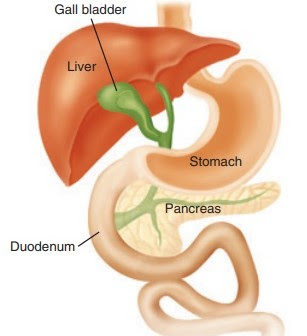
Functions of liver in digestive system

The liver is an organ only found in vertebrates which detoxifies various metabolites, synthesizes proteins, and produces biochemicals necessary for digestion and growth.

In general, main functions of the liver in digestive system include:
*Bile production and excretion
*Synthesis of plasma proteins
*Production of cholesterol and special proteins to help carry fats through the body
*Storage of glycogen, vitamins, and minerals

Liver main job within the digestive system is to process the nutrients absorbed from the small intestine.

Liver is important in carbohydrate metabolism where hepatic cells conduct glycogenesis (converting glucose into glycogen) , and glycogenolysis (breaking glycogen down to glucose).

The liver is one of the largest organs in the body and it is continuously producing bile. Bile from the liver secreted into the small intestine plays an important role in digesting fat and some vitamins.

Bile flows out of the liver into the right and left hepatic ducts, into the common hepatic ducts, and toward the small intestine to help with digestion and the absorption of fats.
Functions of liver in digestive system
Tuesday, April 07, 2009

Summary of Protein and Carbohydrate

Summary of Protein and Carbohydrate
Protein
Proteins are composed of intercoiling strands, in turn composed of amino acids.
  • The proteins function to regulate specific steps in metabolism – one step, one protein. Hence, many proteins are needed.
  • The variety of protein structures is made possible by the order and arrangement of the amino acid building blocks.
  • At any time, body protein is being both synthesized and degraded, an inefficient process which leads to urinary loss of the breakdown products of the amino acid building blocks.
  • This loss is obligatory and necessities regular replenishment – hence the nutritional necessity for protein in the diet.

Carbohydrate
Carbohydrate are composed of sugar molecules, single, paired or in long strands. Dietary carbohydrates are predominantly starch, with some sucrose and lactose.
  • Starch is digested to glucose units, which are observed to be used for energy or for the synthesis of fats.
  • Rising blood glucose levels after a meal stimulates insulin release which disposes of this load. Falling blood glucose levels stimulates glucagon, which maintains a basic minimum level of glucose in the blood.
  • Although sucrose is well tolerated, lactose is poorly tolerated by many people who lack the enzyme to digest it. Both these substances yield glucose or glucose-like compounds on digestion.
Summary of Protein and Carbohydrate

Monday, January 12, 2009

Fats

Fats
If proteins have been dubbed ‘Beauty’ by advertisers, fats are surely ‘The Beast’, for few nutrients have been subjected to as much suspicion by the health profession. This suspicion is sometime justified, although often for wrong reasons.

The confusion is understandable since the chemistry and metabolism of fats is more c0mplex than that of proteins and carbohydrates, that is, up to the point that need interest us.

There are two obvious characteristics of fats about which we are all aware. First, they are not soluble in water, hence the need for detergents to clean up after a fatty mixed grill.

Secondly, some fats are solid at room temperature, say butter, lard or margarine, while others are liquid, mainly the oils – olive, corn, peanut, etc.

These are good starting points for the study of the nutrition of fats, in that we must explain how fats, insoluble in water are digested and metabolized in the largely watery environment of the body and how the chemistry of fats can explain their physical properties.

The basic units of fats are known as fatty acids, but fat molecules are not made up of repeating fatty acid units. Fat molecules are known as triglycerides and are comprised of glycerol with fatty acids attached to the top, middle and bottom of the glycerol molecule. Hence fatty acids come in threes.

Like –proteins, there are no rules as to what fatty acids must occupy what positions on the glycerol molecule, or what mixes of three fatty acids should cling to a molecules of glycerol.

Three grouping of fatty acids:
  • Saturated fats
  • Monounsaturated
  • Polyunsaturated fats

If you purchase a sample of pure saturated fatty acids from a chemical supplier you would find that they were solid at room temperature. Monounsaturated and polyunsaturated fatty acids would be liquid. Therefore the hardness or softness of a dietary fat depends on temperature and the balance between the three categories of fatty acid.
Fats

The most popular Articles

Other interesting articles

  • Veins are vital blood vessels that play a central role in maintaining healthy circulation by returning blood to the heart. Together with arteries and capil...
  • Biotin, also known as vitamin B7 or sometimes referred to as vitamin H, is a water-soluble B-complex vitamin that plays a crucial role in maintaining the b...